

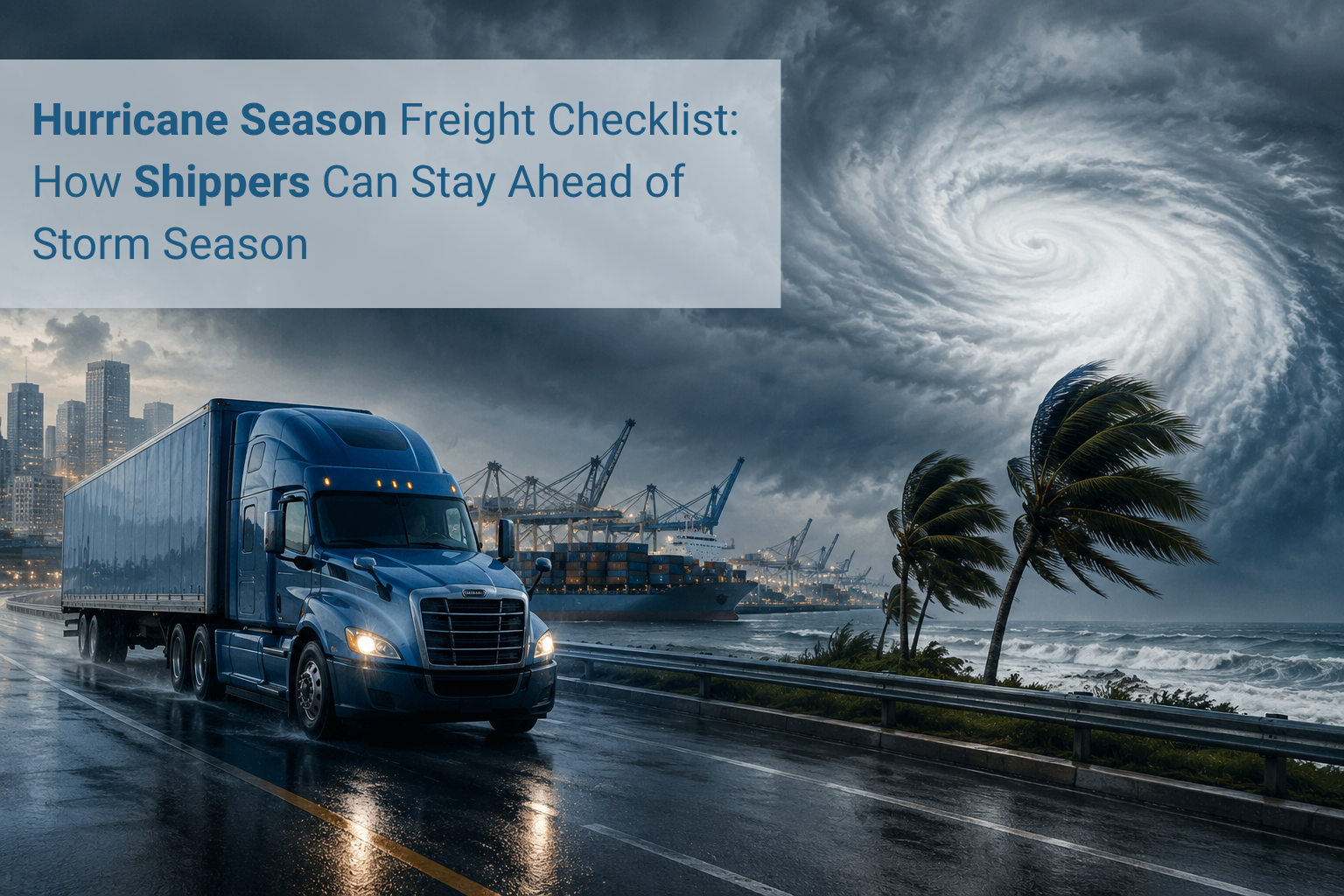


Every year, the same question comes up as summer turns to fall: how bad will hurricane season be? For 2026, NOAA’s outlook leans favorable, but a favorable forecast is not a freight plan. The shippers who come through hurricane season with the fewest delays aren’t the ones hoping for a quiet year. They’re the ones who prepare the same way, every year, regardless of the forecast.
Here’s a practical checklist for keeping freight moving through the highest-risk months of the year.
Know the Numbers, But Don’t Rely on Them
NOAA’s latest 2026 outlook calls for 7 to 13 named storms, 2 to 6 hurricanes, and up to 2 major hurricanes, with a 75% chance of a below-normal season driven by a strengthening El Niño pattern. Those numbers are useful context, but they describe the whole season, not any single lane, port, or delivery date. Freight planning has to account for the possibility of disruption regardless of how the season totals turn out.
Mark the Real Risk Window on Your Calendar
Hurricane season technically runs June through November, but the freight-relevant window is much shorter: September through October, with risk peaking around mid-September. This is when shippers moving freight through Gulf Coast, Florida, and Southeast lanes should have contingency plans active, not just on standby.
The Checklist
1. Build Buffer Time Into Lead Times
For any shipment touching a hurricane-prone lane between September and October, add extra days to your planning window, especially for time-sensitive or scheduled deliveries.
2. Flag High-Risk Freight Early
Perishable, refrigerated, and high-value shipments carry the most exposure. Identify these loads before storm season, not once a storm is already forming.
3. Confirm Backup Routing With Your Broker
Know in advance which alternate lanes, ports, or delivery paths are available if a primary route closes. Waiting until a storm is named to ask “what’s the backup plan?” costs valuable time.
4. Watch Tropical Development, Not Just Landfall
Disruption often starts a week before a storm makes landfall, as carriers begin repositioning and terminals prepare to close. Tracking a system from the moment it’s flagged, not just when it becomes a named storm, buys more time to react.
5. Keep Communication Open With Carriers and Terminals
Delays are far more manageable when everyone in the chain (carrier, driver, terminal, receiver) is getting the same information at the same time.
6. Review Cargo Insurance Before, Not During, Storm Season
Confirm coverage details for weather-related delays and damage ahead of time. This isn’t something to sort out once a shipment is already at risk.
7. Expect Regional Rate Volatility
Even lanes outside the direct storm path can see capacity tighten and rates rise as carriers reroute. Build that possibility into freight budgets for August through October.
Why Preparation Matters Even in a “Quiet” Year
A below-normal forecast doesn’t mean below-normal consequences. It only takes one storm making landfall in the wrong place to close a port for days, strand freight on flooded highways, or overwhelm a distribution center. Shippers who treat every hurricane season the same, with the same level of preparation, are the ones who avoid scrambling when a storm actually forms.
How Loop Logistics Supports Shippers Through Storm Season
At Loop Logistics, hurricane season planning isn’t something we start when a storm gets a name. Our team tracks tropical activity across the Gulf and Atlantic through the entire August–October window, stays in constant contact with carriers and terminals, and works with shippers to build routing contingencies before disruption hits, not after.
Add Comment