

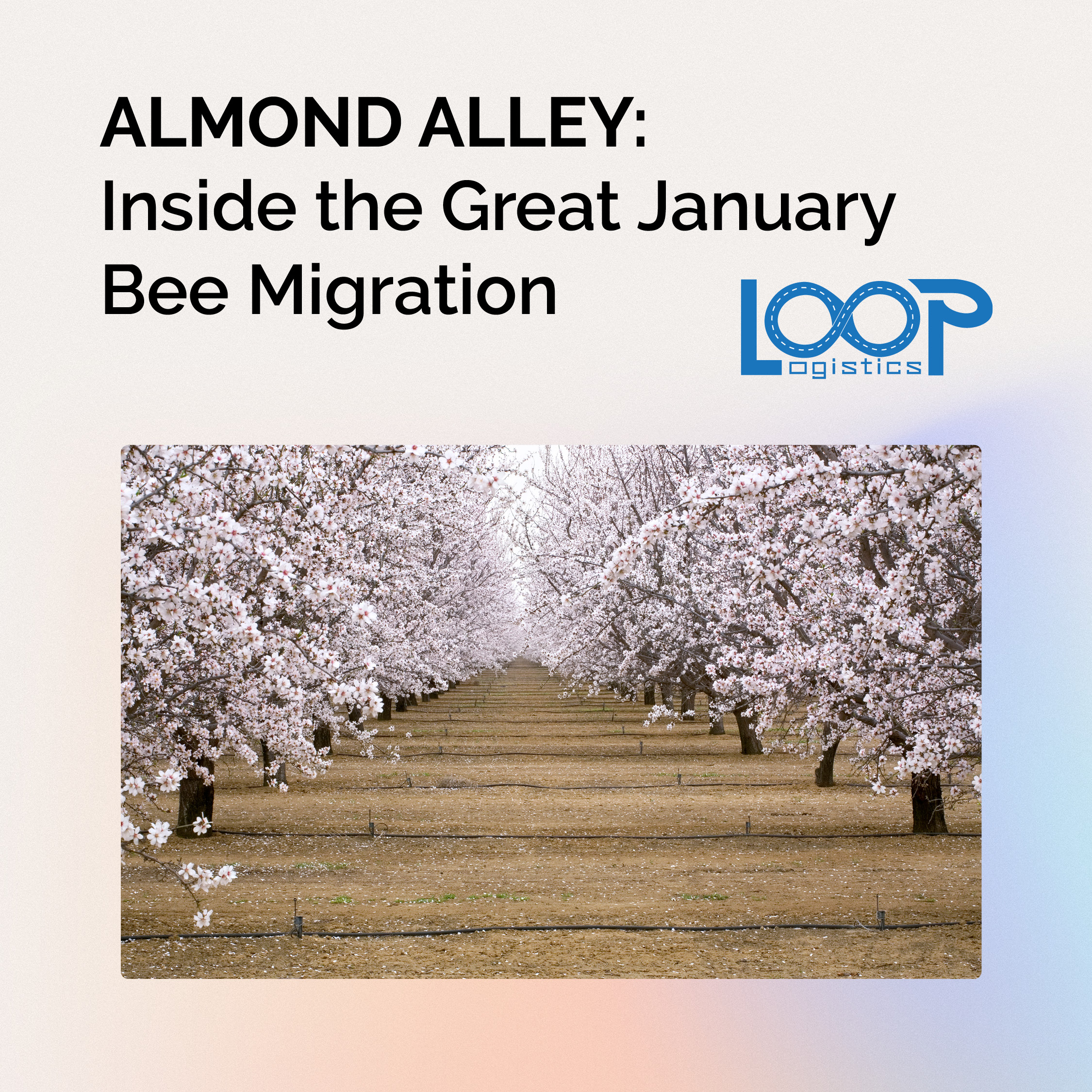
If you’ve ever hauled bees to California in January, you know “almond season” is just a polite way of saying “Thunderdome with bloom maps.” Every year, roughly 1.5 million hives roll into the Central Valley to wake up 80% of the world’s almond trees—and behind every pallet of bees is a beekeeper juggling weather apps, brokers, and drivers who now know more about bee temperament than some new beekeepers.


For the bees, almonds are a spring break. For you? It’s logistics boot camp.
Timing: Hit the Bloom, Dodge the Blizzard
The money’s made in that narrow window between “buds tight” and “petals on the ground.” Show up too early and your hives sit burning feed in a muddy orchard, burning diesel on the P&L. Show up late and you’re the guy watching neighbors’ bees working while your colonies are still bouncing down I-40.
Smart operations treat almonds like an air traffic schedule, not a road trip. You map out:
- Load-out nights based on your coldest, calmest windows
- Chill hour forecasts and bloom progression by region
- Staggered arrivals so bees don’t all hit the same orchard on the same day
And here’s where hauling quietly makes or breaks the season. A driver who understands “must arrive by X date” is nice; a driver who understands “must arrive at dusk, avoid gridlock in Bakersfield, and absolutely no 2 p.m. fuel stops in the Mojave” is gold.
Heat, Airflow, and the Great Highway Hive Meltdown
Everyone has heard the horror story: a trailer stuck in traffic on a sunny grade, bees bearding, fanning like crazy, and you’re praying those screens hold. Overheating isn’t just “some dead bees”—it’s nuked brood, queen losses, and a spring that never recovers.
A good almond run is built on three things:
- Airflow: light-weight aluminum trailer, breathable netting, properly placed pallets, i.e. not stacking hives like Jenga just to save one more row.
- Route planning: Avoiding brutal climbs in midday sun and knowing where the shady pull-offs and quick-in/quick-out fuel stops are.
- Communication: A driver who actually calls when temps are climbing, not after the fact with “yeah, they got a little hot.”
You can’t control the weather, but you can control who’s behind the wheel and how they’re trained to think about live bees, not just load weight.
After Almonds: The Nomad Life Continues
Of course, almonds are just the opening act. Once the petals fall, you’re pointing those same hives toward apples, cherries, blueberries, melons, or back to home country for a nectar flow. The operations that stay profitable don’t treat each move as a one-off; they plan a migration arc—a loop that keeps bees working, keeps trucks full, and keeps stress low.


Source: National Geographic, May 2015.
That’s where a dedicated bee-hauling partner becomes less “vendor” and more “logistics wingman.” Someone who knows your yards, your queen lines, and how your bees ride. Someone who can help you stitch almonds to the next gig without a dozen half-empty trips and a pile of exhausted colonies.
Because at the end of the day, almonds are the biggest stage we’ve got—but they’re still just one stop on the tour. The real win is getting your bees there and back strong, ready for whatever bloom is next on the map.
If your January looks like controlled chaos on Google Sheets, you’re not alone. But you don’t have to white-knuckle Almond Alley every year. The right hauling strategy turns that migration from a stress bomb into a predictable, profitable rhythm—so you can focus on what you do best: building bees, not chasing loads.
About the Author:


Nick Loski
Nick’s been knee-deep in the buzzing world of commercial beekeeping for over a decade, hauling more hives than a Texas county fair has corn dogs.
As the go-to guy for safe, on-time bee transportation, he specializes in everything from cross-country hive migrations and pollination runs to hauling wooden ware, honey extractors, equipment, and even those specialized and oversized loads that make DOT inspectors raise an eyebrow. A fierce advocate for healthy bees and real American honey, his efforts are focused on keeping our pollinators protected, our crops thriving, and beekeepers’ operations smoother than a fresh frame of comb.
Need a haul handled right? Call Loop Logistics and ask for Nick—because every queen deserves a first-class ride.


Add Comment